Donor-funded programmes in Kenya carry a high level of responsibility, especially where UK Aid funding is involved. Organisations must be able to show that grant funds have been used properly, expenditure is eligible, internal controls are working, and donor conditions have been followed. For NGOs, charities, implementing partners and project managers, a strong audit is not just a compliance requirement — it is a way to build donor confidence. In this guide, we explain how Spondoo Kenya supports UK Aid audits, donor expenditure verification and independent assurance for programmes operating in Kenya.
Most international founders are surprised to discover that opening a personal or company bank account in Kenya does not always require travelling to Kenya or appointing a local nominee director. With the right company structure, compliance documents and banking support, many foreign entrepreneurs, investors and diaspora clients can complete much of the process remotely. If you assumed a Kenyan bank account required a flight to Nairobi, this guide will show you how the process may be simpler than you think.
If you are planning to mine, trade or export gold and minerals from Kenya, obtaining the correct licences and permits is essential. Kenya's mining sector is regulated, and businesses must secure the appropriate approvals before mining, dealing in minerals or exporting shipments. Whether you need a Mining Licence, Dealer's Licence or Export Permit, understanding the requirements early can help avoid costly delays and compliance issues. In this guide, we explain the key differences between these approvals and how Spondoo.ke can support your licensing, tax and regulatory compliance requirements in Kenya.
Most expat entrepreneurs are surprised to discover that Nairobi has been home to a thriving startup ecosystem since 2010 — with world-class accelerators, active VC funds, and multinational corporations all running innovation programmes that regularly partner with early-stage foreign-led businesses. Building in an emerging market does not mean building alone — in Nairobi, it means joining one of the most connected, collaborative, and internationally-wired founder communities on the continent. If you assumed Kenya meant isolation, this article will completely change how you see the opportunity.
Kenya allows foreign nationals to own 100% of a registered company — and the entire registration process can be completed remotely, without setting foot in a single government office. But the system was not built with non-residents in mind, and without the right guidance, documentation errors, KRA PIN rejections, and missed deadlines can delay your plans by weeks. This is the step-by-step guide that tells you exactly what is involved, what to prepare, and where most expat applications go wrong — before any of it happens to you.
Registering a company in Kenya as a foreign national is entirely achievable — but a surprising number of expat entrepreneurs lose weeks, money, and momentum to the same five preventable mistakes. From incorrect documentation and rejected KRA PIN applications to lapsed name reservations and the wrong bank choice, each of these errors follows a predictable pattern — and every single one is the result of navigating a system that was not built with foreign nationals in mind. Read this before you start your application, because the cost of getting it wrong is significantly higher than the cost of getting it right the first time.
Nairobi is an eight-sector opportunity — and expat entrepreneurs are already building profitable businesses across fintech, agri-tech, e-commerce, health tech, and more. In almost every sector, demand outpaces supply, meaning a well-run foreign business does not fight for market share — it simply shows up and serves it. Whatever your industry, Kenya has a gap waiting to be filled — and Spondoo gets you registered and ready to move.
Kenya's business environment is one of Africa's best-kept secrets — 100% foreign ownership, corporation tax as low as 10% in Special Economic Zones, and double taxation treaties with over 30 countries protecting your profits. Over 70,000 English-speaking graduates enter the market annually, delivering world-class talent at a fraction of Western costs. If you assumed Kenya was complicated for foreign investors, this article will change your mind — and Spondoo will handle the registration once it does.
Kenya is not just a market of 55 million — it is the commercial gateway to the entire East African Community, a regional bloc of over 300 million consumers spanning seven fast-growing economies. Expat entrepreneurs who register a company in Nairobi gain instant access to cross-border trade networks, a digitally-ready customer base, and a business environment where demand dramatically outpaces supply in almost every sector. If you are looking for a single registration that opens multiple markets, Kenya is the only address that makes sense.
Kenya just overtook nearly every African market for foreign investment — and the numbers are impossible to ignore. GDP growing at 5-6% annually, M-Pesa processing over 50% of the country's GDP, and Google, Microsoft, and Visa all calling Nairobi home. If the world's biggest companies have already made their move, what are you waiting for?
Nairobi has quietly become the most exciting place on the continent to build a business — attracting billions in venture capital, a world-class tech talent pool, and a startup culture that rivals emerging hubs globally. For expat entrepreneurs in tech, fintech, agri-tech, or e-commerce, a Kenyan-registered company unlocks access to East Africa's 300-million-strong consumer market, regional trade networks, and government incentives designed to attract foreign investment. Spondoo handles your entire company registration remotely — so while others are still figuring out the paperwork, you're already open for business in Africa's Silicon Savannah.
Getting a work permit in Kenya is not complicated — but it is unforgiving of the wrong permit class, a weak justification letter, or documents that are missing one certification. The full process from document preparation to an endorsed permit typically takes three to five months, and starting late is the single most predictable reason it goes wrong. Spondoo Kenya manages the entire process — from identifying the right class to eFNS submission, approval, and full compliance setup — so you arrive in Kenya with everything properly in place.
Before you go live on Odoo MRP, read this.
Most implementation mistakes don't show up during setup — they appear three months later in your stock count, your margin figures, and your month-end close. Here's what to get right from the start.
A KRA PIN isn't optional — without one, your property deal, bank account, or business registration in Kenya simply won't happen. Foreign nationals are getting caught out by a system that wasn't built for them, losing days, deals, and money in the process. Spondoo fixes that: we handle your entire KRA PIN application remotely, so you can move forward without the bureaucratic headache.
Unlock better tax savings with Spondoo Kenya — DTAA: Certificate of Tax Residency Service. A Tax Residency Certificate helps reduce withholding tax and avoid double taxation on global income. Start early to ensure smooth compliance and maximize your financial efficiency.
Turnover Tax in Kenya is one of the simplest tax obligations for small businesses, making compliance with KRA faster and more predictable. Understanding how to calculate and pay the 1% Turnover Tax can help you avoid penalties while improving your financial planning. This guide breaks down everything you need to know about filing, deadlines, and whether Turnover Tax is the right choice for your business.
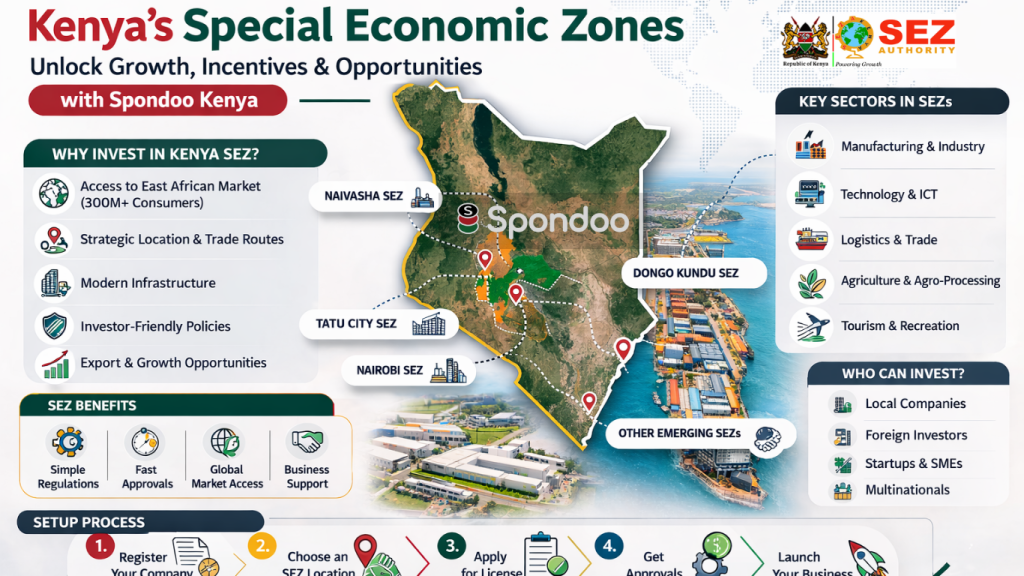
Kenya is one of Africa’s fastest-growing investment destinations, attracting global companies with strong economic growth and strategic access to East African markets. Special Economic Zones (SEZs) offer businesses tax incentives, modern infrastructure, and simplified regulations designed to support international investors. With Spondoo Kenya, companies can easily register their business, obtain SEZ licenses, and launch operations in Kenya’s thriving investment ecosystem.
Struggling with VAT errors and trying to figure out How to fix iTax VAT mismatches without penalties or stress? You're not alone — thousands of Kenyan businesses face the same challenge every month due to supplier issues, incorrect invoice details, and new eTIMS requirements. This guide gives you clear, simple, and actionable steps that will help you fix mismatches fast, avoid unnecessary assessments, and keep your tax compliance clean and worry-free.
Filing your taxes on iTax shouldn’t feel like a maze, yet thousands of Kenyans face rejection errors every year—many caused by simple mistakes. If your return keeps bouncing back, you’re not alone, and the good news is most issues are easy to fix once you know what to look for. This guide breaks down the most common reasons your iTax return gets rejected and shows you exactly how to correct them so you can file confidently and avoid penalties.
Navigating Corporate Tax Instalments in Kenya can feel overwhelming, especially with stricter KRA monitoring and rising penalties in 2026. Many Kenyan businesses unknowingly lose money simply because they misunderstand how instalment tax works—or miss critical deadlines. This guide simplifies everything so you can stay compliant, avoid penalties, and keep more of your hard-earned profits.
Running payroll in Kenya is more complex than ever—especially with new rules like SHA replacing NHIF and ongoing updates to PAYE, NSSF, and the Housing Levy. Employers who don’t stay updated risk penalties, compliance issues, and unnecessary payroll headaches. This guide breaks it all down in simple, accurate terms so you can confidently manage payroll—or let Spondoo Kenya handle everything for you.
Preparing for an external audit doesn’t have to be overwhelming, not when you know exactly what auditors look for and how to set your books up for a clean review. Most audit delays and frustrations come from issues that could be easily fixed before the auditors arrive. This guide walks you through the essential pre-cleaning steps that make your audit faster, clearer, and far more favourable for your business.
Leveraging donor funding effectively requires more than just good intentions—it demands structure, discipline, and the right systems. Many Kenyan organisations miss out on future grants not because of poor performance, but due to weak reporting and compliance practices. The following practical tips will help your organisation stay compliant, maintain donor confidence, and build long-term financial sustainability.
Running a small business in Kenya isn’t just about growth — it’s about protecting what you’ve built. From managing mobile payments to keeping your books tax-compliant with KRA, even a single weak control can expose your business to costly fraud and penalties. This guide breaks down practical, affordable ways to strengthen your internal controls and safeguard your SME from fraud while staying 100% compliant.
Before closing your financial year, every Kenyan company should take time to review tax obligations, optimise deductions, and ensure full KRA compliance. Start by reconciling instalment tax payments, updating your eTIMS invoices, and verifying deductible expenses to avoid last-minute penalties. Proactive tax planning doesn’t just save money — it strengthens your financial position for the new fiscal year ahead.
Running an SME in Kenya isn’t for the faint-hearted. Every shilling matters, every choice counts, and one missed KRA deadline can throw your entire plan off balance. With rising costs, evolving tax rules, and unpredictable markets, staying afloat takes more than luck — it takes strategy. That’s why smart entrepreneurs treat budgeting and forecasting as their financial compass — guiding decisions, protecting profits, and ensuring long-term stability.
Running a Kenyan company with a UK or UAE subsidiary sounds impressive — until accounting across borders starts draining your time and profits. Different currencies, tax systems, and KRA rules can turn global growth into a compliance maze. Here’s how to simplify your books, stay compliant, and keep your cross-border business profitable on both sides.
Are you confident your tax records could survive a KRA audit? Every year, hundreds of Kenyan SMEs unknowingly trigger audits due to small, avoidable mistakes in their iTax filings, eTIMS invoices, and accounting books. In this guide, you’ll learn expert-backed, KRA-compliant strategies to help your business stay off the audit radar, maintain perfect tax hygiene, and protect your profitability all year long.
Are you wondering how to convert profit into cash before year-end in Kenya? You’re not alone. Every year, countless Kenyan businesses report impressive profits but still find their bank accounts running dry when it matters most. This expert guide reveals actionable, KRA-compliant financial strategies to help you transform paper profits into real cash flow, improve liquidity, and start the new financial year with confidence, stability, and growth.
It’s crunch time for Kenyan businesses! As the financial year winds down, now’s the moment to get your books, taxes, and reports ready for a clean year-end close. Follow this smart checklist by Spondoo Kenya, Fresh Ideas to stay KRA-compliant and close Q4 with confidence.
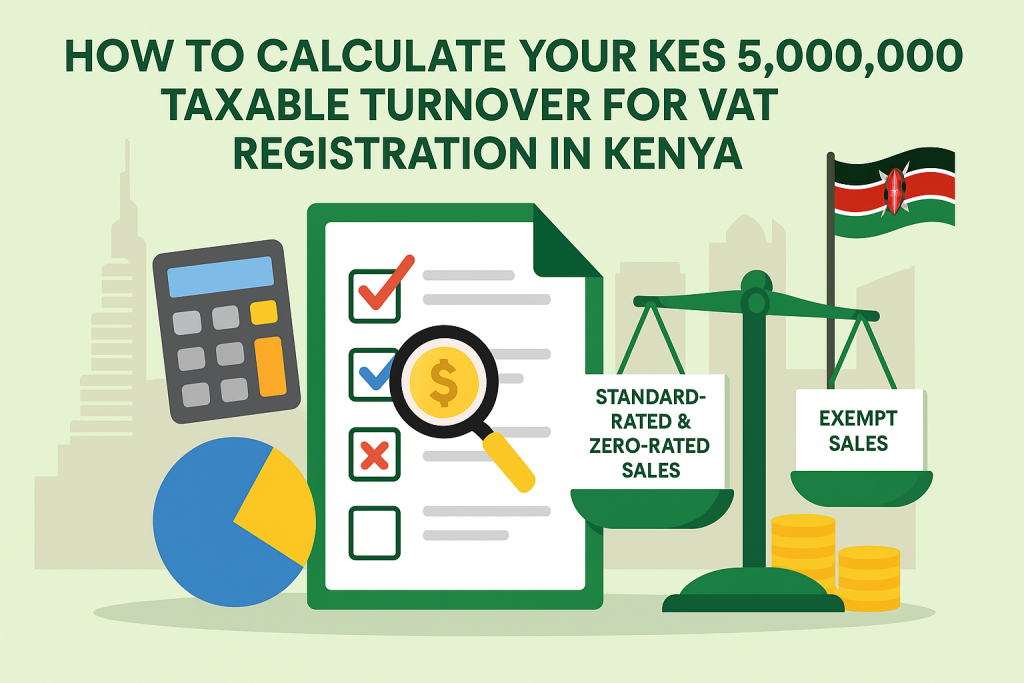
Understanding VAT registration in Kenya is crucial for every growing business. Once your taxable turnover hits KES 5,000,000 in any 12-month period, you are legally required to register for VAT with the Kenya Revenue Authority (KRA). In this guide, we’ll explain exactly what counts as taxable turnover, what to exclude, and how to calculate it step by step—so you can stay compliant and avoid costly penalties.
Exporting services can be a powerful growth strategy, but VAT rules differ greatly between Kenya, the UK, and the EU. In Kenya, exported services are zero-rated, while in Europe many fall out of VAT scope, creating important implications for compliance and pricing. This article breaks down the key differences and explains how Spondoo Kenya, an experienced accounting firm, can help your business stay tax-efficient and globally competitive.
Company Setup • Registered Address • Virtual Office Services
Looking to start a business in Nairobi? Whether you’re a local entrepreneur or a global investor entering Kenya’s booming market, Spondoo Kenya makes launching and scaling your company fast, affordable, and seamless. From expert company registration to prime office addresses and virtual office solutions — we’ll help you grow your business the smart way, right here in Nairobi.
Running a bar or restaurant in Nairobi is challenging enough—don’t let hidden losses sabotage your hard-earned profits. If your gross profit margins are swinging wildly, it’s rarely just “bad business luck.” Learn to spot the red flags of theft, wastage, and poor controls before they sink your bottom line.
Mobile payments via M-Pesa Till numbers are fast and convenient, but they can quietly wreak havoc on your stock control. Without an integrated system, it’s easy to lose track of purchases, increasing the risk of errors and fraud. Here’s why smart businesses in Kenya should rethink how they manage payments and stock.
Want to take the hassle out of banking in Odoo? This streamlined guide shows Kenyan businesses how to effortlessly connect, configure, and manage bank feeds—whether you're automating transactions or importing statements manually. Simplify your accounting and stay in control.
Smart financial management is key to business success. With NetSuite’s cloud accounting, Kenyan businesses can automate processes, stay tax compliant, and gain real-time financial insights. Partner with Spondoo Kenya to unlock NetSuite’s full potential!
Managing your business finances has never been easier with SAP’s powerful accounting tools. Automate your financial processes, reduce manual errors, and ensure seamless compliance with Kenyan tax laws effortlessly. Whether you're a startup or a large enterprise, SAP provides scalable solutions with multi-currency and multi-entity support to help you expand globally. Gain real-time financial insights to make data-driven decisions and optimize business performance. Partner with Spondoo Kenya today for expert SAP accounting services and take your financial management to the next level!
Managing business finances can be challenging with outdated methods. Xero Accounting Software offers a cloud-based, automated solution for seamless bookkeeping and tax compliance. As certified Xero accountants, Spondoo Kenya helps businesses transition to efficient, technology-driven financial management for compliance and growth.
Information provided on the site is merely guidance that may change in line with Kenya law and regulations. Users must not consider this to be financial advice or their sole resource when making any financial decision. Spondoo & Spondoo.ke is a trading name of Accounting SQL Limited, authorised & license accounting firm in the United Kingdom. This trading name is licensed to Spondoo Advisers Limited, an authorised & licensed accounting firm in the Republic of Kenya.